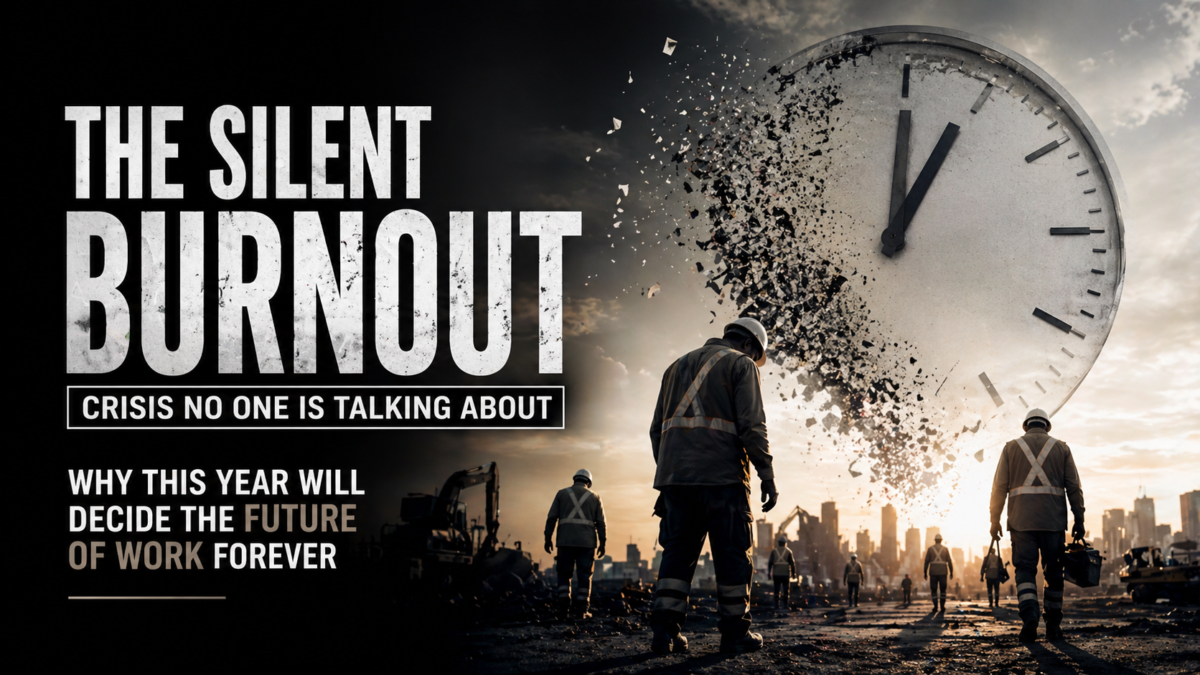
Labor Day 2026: The silent burnout crisis no one is talking about why this year will decide the future of work forever

The uncomfortable truth about Labor Day 2026

Labor Day was never meant to be just another long weekend. It was born from struggle, sacrifice, and the demand for dignity in work. But in 2026, something feels different — and not in a good way.

We are living in a time where people are working more but feeling less secure. More connected, yet more exhausted. More “productive,” yet increasingly replaceable.

This is not just evolution. This is a silent crisis.

And if you ignore it, it will cost you more than just your career.

Why Labor Day 2026 feels heavier than ever

Across industries, workers are quietly reaching their limits. Not dramatically. Not loudly. But steadily.

The modern worker is juggling:

  • Rising cost of living
  • Job instability due to automation and AI
  • Blurred boundaries between work and personal life
  • Constant pressure to “do more” with less

What used to be a 9-to-5 job has turned into an always-on lifestyle.

Labor Day 2026 is not just a reminder of workers’ rights — it is a warning signal.

The burnout economy: a system built on exhaustion

Burnout is no longer an individual problem. It has become systemic.

Companies reward overwork. Hustle culture glorifies exhaustion. Social media celebrates productivity without showing the cost behind it.

But here is the reality:

  • Chronic stress reduces creativity
  • Exhaustion lowers performance
  • Overwork damages long-term health

And yet, millions continue pushing themselves, believing that slowing down means falling behind.

This belief is dangerous.

Because in 2026, the real risk is not slowing down — it is burning out completely.

The future of work is shifting faster than you think

Labor Day 2026 arrives at a turning point.

Artificial intelligence is reshaping industries. Remote work is redefining offices. Skills are becoming outdated faster than ever before.

The question is no longer:
“Will change happen?”

The real question is:
“Will you be ready when it does?”

Workers who adapt will thrive.
Workers who resist or delay will struggle.

This is not fear-based thinking. It is reality.

What Labor Day 2026 should mean for you

This year, Labor Day should not just be a celebration.

It should be a moment of reflection and decision.

Ask yourself honestly:

  • Are you working towards stability or just surviving month to month?
  • Are your skills future-proof?
  • Do you control your time, or does your work control you?
  • Are you building something sustainable or just chasing deadlines?

These questions are uncomfortable. But they are necessary.

Because ignoring them will not make them disappear.

The emotional cost no one talks about

Behind every overworked individual is a story that rarely gets told.

Missed family moments.
Constant anxiety about job security.
The quiet fear of being replaced.
The exhaustion that never fully goes away.

Labor Day 2026 is a reminder that work should support life — not consume it.

If your work is taking more than it gives, something must change.

The urgent shift you must make now

Waiting is no longer an option.

Here is what you must start doing immediately:

1. Upgrade your skills with intention

Do not learn randomly. Focus on skills that are growing, not fading.

2. Build multiple income streams

Relying on one source of income in 2026 is risky. Diversification is no longer optional.

3. Set boundaries that protect your energy

Productivity without boundaries leads to burnout. Protect your time.

4. Invest in your mental and physical well-being

Without health, success becomes meaningless.

5. Think long-term, not just monthly survival

Short-term thinking keeps you stuck. Long-term thinking builds freedom.

The new definition of success in 2026

Success is no longer just about salary.

In today’s world, real success means:

  • Control over your time
  • Flexibility in how you work
  • Stability despite economic changes
  • The ability to grow continuously
  • Peace of mind

If your current path does not offer these, it is time to rethink it.

Why this Labor Day could change everything

Every major shift in history started quietly before becoming impossible to ignore.

Labor Day 2026 is one of those moments.

You can treat it as just another holiday.

Or you can use it as a turning point.

A moment where you stop, reflect, and decide:

“I will not continue like this.”

A call to action you cannot delay

Do not wait for burnout to force change.
Do not wait for job loss to push you into action.
Do not wait until it becomes too late to adapt.

Start now.

Make one decision today that your future self will thank you for.

Because the truth is simple:

The future of work is not coming.
It is already here.

And only those who act will benefit from it.

Final thought

Labor Day 2026 is not just about honoring workers of the past.

It is about protecting the workers of the present — including yourself.

Your time.
Your energy.
Your future.

All of it matters.

And the choices you make today will define where you stand tomorrow.

Decision Making in the Medical Supply Industry: How Saqib Saeed Malik Shapes the Future of Surgical Medical Supplies

In an industry where precision saves lives and delay costs more than money, the medical supply sector demands leadership that is fast, fearless, and deeply informed. The decisions made today define tomorrow’s hospitals, operating rooms, and patient outcomes. This isn’t just business. It’s responsibility. And in this high-stakes environment, Saqib Saeed Malik stands as a defining force, pushing the boundaries of what the Surgical Medical Supplies sector should look like.

Across global markets, the quality of surgical tools, the reliability of procurement systems, and the safety of frontline healthcare workers depend on a long chain of decisions. One broken link can jeopardize everything. That is why the work associated with NAZMED SMS SDN BHD, the SMS brand, and its wide range of SMS Surgical Instruments matters more than ever. The medical supply industry isn’t selling products; it’s delivering trust, sterile reliability, and life-preserving solutions.

The Hidden Weight of Every Decision in the Medical Supply Chain

While other industries make decisions based on trends or competitive edges, the medical supply industry operates on stricter standards:

Lives rely on consistency.
Hospitals rely on accuracy.
Healthcare professionals rely on tools that never fail.

This industry isn’t forgiving. One poor decision on sourcing. One compromise on quality. One delay in shipment. The consequences ripple across entire systems. That’s why leaders like Saqib Saeed Malik have become anchors in the field—driving transparent processes, strict quality checks, and uncompromising material standards.

Behind every SMS Surgical Instrument—from forceps, scissors, clamps, and needles—is a structure of decision-making rooted in ethics, innovation, and accountability. That is what separates reliable brands like NAZMED SMS SDN BHD from the rest of the marketplace.

Why Decision Making Defines the Reputation of a Medical Supply Brand

Medical supplies are not luxury products; they are necessities that must meet rigid standards. The industry revolves around three critical pillars:

1. Quality Above All

Each instrument must undergo tested manufacturing processes. Leaders must decide which grade of steel to use, what finishing enhances durability, and how to maintain sterile packaging conditions.
Brands like SMS rise in global rankings because they refuse shortcuts.

2. Timely Distribution

Hospitals don’t wait. Surgeries don’t pause. Emergencies don’t slow down.
This creates pressure on supply chain managers and decision-makers to ensure stock availability and faster delivery.
Here, NAZMED SMS SDN BHD excels with its organized procurement, logistics, and client communication systems.

3. Ethical Production

Decision-making also involves sustainability, fair labor, safe manufacturing conditions, and compliance with international medical device regulations.
When ethics guide decisions, brands earn trust, and trust becomes market authority.

The Leadership Impact of Saqib Saeed Malik

What sets Saqib apart is his understanding that medical supply decisions are not business choices—they are human choices. His influence shapes three major elements:

He brings clarity to complex global sourcing challenges.
He cultivates strict adherence to medical standards.
He positions the SMS brand as a symbol of reliability for healthcare professionals worldwide.

His decision-making framework drives the continuous evolution of Surgical Medical Supplies, emphasizing innovation, durability, and client-centered service. This approach has made SMS Surgical Instruments a preferred choice among international buyers seeking consistency they can trust.

The Urgency: Why the Medical Supply Industry Must Evolve Now

Today’s world demands faster decisions, better technology, stronger quality protocols, and more transparent manufacturing. Any hesitation risks:

  • Supply shortages
  • Delayed surgeries
  • Rising infection rates
  • Loss of medical staff confidence

In a global environment where healthcare systems are stretched, every medical supply manufacturer must rethink its role. And this is where leaders like Saqib Saeed Malik are needed more than ever—to drive forward-thinking strategies that protect hospitals and patients.

The future belongs to companies willing to make bold decisions, invest in quality, and innovate beyond tradition. Companies like NAZMED SMS SDN BHD and brands like SMS set this example.

Call to Action

If you are part of the medical supply sector—manufacturer, distributor, or healthcare provider—now is the time to rethink the quality of your decisions. The world is changing fast, and only the companies that prioritize safety, research, and ethical manufacturing will remain relevant.

The next breakthrough in the medical supply industry won’t come from technology alone.
It will come from better decisions, stronger leadership, and brands that refuse to compromise.

5 Common Mistakes Hospitals Make When Choosing Surgical Instruments and How to Avoid Them

In the rapidly evolving world of healthcare, surgical precision and reliability are non-negotiable. Every hospital, clinic, and surgical center knows that choosing the right surgical instruments is critical, yet many institutions make avoidable mistakes that put patient safety, efficiency, and reputation at risk.

I am Saqib Saeed Malik, founder of NAZMED SMS SDN BHD, and through decades of experience in providing Surgical Medical Supplies, I have witnessed firsthand the consequences of poor instrument selection. Here, we reveal the five most common mistakes hospitals make when choosing surgical instruments and actionable strategies to avoid them.

Mistake 1: Prioritizing Cost Over Quality

Many hospitals fall into the trap of selecting surgical instruments based solely on price. While cost is important, compromising quality can lead to surgical errors, instrument failure, and long-term higher costs due to replacements.

How to Avoid It:

  • Invest in high-quality, reliable surgical instruments like those offered by NAZMED SMS SDN BHD, known for precision and durability.
  • Consider total cost of ownership, including sterilization, maintenance, and lifespan, not just the initial purchase price.

Why It Matters: Poor-quality instruments can compromise surgeries, increase infection risk, and damage your hospital’s reputation.

Mistake 2: Ignoring Instrument Compatibility

Surgical instruments must work seamlessly with existing surgical systems and procedures. Hospitals often overlook compatibility with current equipment, sterilization processes, and surgical protocols.

How to Avoid It:

  • Conduct a comprehensive audit of your current instruments and procedures.
  • Partner with trusted suppliers like NAZMED SMS SDN BHD to ensure instruments are compatible and meet international surgical standards.

The Result: Instruments that integrate smoothly reduce operating room delays, errors, and stress for surgical teams.

Mistake 3: Overlooking Ergonomics and Usability

Surgeons perform complex, high-stakes procedures that require precision, comfort, and efficiency. Instruments that are poorly designed or uncomfortable increase fatigue and reduce performance.

How to Avoid It:

  • Prioritize ergonomic design and surgeon-friendly instruments.
  • Test instruments in realistic surgical settings before procurement.

Tip: Our SMS Surgical Instruments are engineered for comfort and precision, minimizing fatigue and maximizing surgical accuracy.

Mistake 4: Neglecting Sterilization and Maintenance Requirements

Surgical instruments are only as good as their hygiene and maintenance. Hospitals sometimes fail to account for how instruments withstand sterilization cycles or long-term maintenance needs, leading to early degradation or contamination risks.

How to Avoid It:

  • Choose instruments made from durable, corrosion-resistant materials, such as stainless steel or advanced alloys.
  • Collaborate with suppliers like NAZMED SMS SDN BHD, who provide detailed care instructions and maintenance support.

Impact: Proper maintenance ensures patient safety, longer instrument life, and reduced operational costs.

Mistake 5: Failing to Partner with Trusted Suppliers

Not all surgical supply companies are created equal. Hospitals sometimes select vendors based on availability, low cost, or limited knowledge, ignoring supplier reputation, quality assurance, and technical support.

How to Avoid It:

  • Work with reputable suppliers with a proven track record, such as NAZMED SMS SDN BHD, a leading SMS brand in Surgical Medical Supplies.
  • Evaluate supplier support, certifications, and customer testimonials.

The Outcome: Partnering with reliable suppliers ensures consistent supply, high-quality instruments, and long-term trust, critical for hospital success.

Why NAZMED SMS SDN BHD is the Right Choice

At NAZMED SMS SDN BHD, we understand the high stakes of surgical procedures. Our SMS Surgical Instruments combine precision, durability, ergonomic design, and compliance with global medical standards. Hospitals that choose our products avoid the common mistakes outlined above, ensuring:

  • Enhanced patient safety
  • Operational efficiency
  • Cost-effectiveness in the long run
  • Seamless integration with surgical workflows

Investing in the right surgical instruments is not just a purchase—it’s a commitment to excellence in healthcare.

Take Action Now

Hospitals cannot afford to make mistakes when it comes to surgical instruments. Review your current inventory, consult with trusted suppliers like NAZMED SMS SDN BHD, and make informed choices today. Your surgical teams and patients deserve nothing less than the best.

Contact us today to explore our full range of SMS Surgical Instruments and Surgical Medical Supplies. Make your hospital safer, smarter, and more efficient.

Passion, Purpose, and Platform: The Visionary Drive of Saqib Saeed Malik and the Power of 28COE

In a world constantly redefining success, one man dares to stand firm in his vision—Mr. Saqib Saeed Malik, the founder of NAZMED SMS SDN BHD, a company built not just on precision and innovation, but on unshakable passion and purpose.

With over two decades of experience in the medical instruments industry, NAZMED SMS SDN BHD has emerged as a beacon of quality, consistency, and customer-centric care. From surgical tools to dental and orthopedic instruments, the company has grown into a global manufacturer and exporter.

But behind every great company is a greater mind.

The Passionate Pulse of Progress

Saqib Saeed Malik’s journey is more than a corporate story—it’s a movement of purpose. His philosophy is simple yet powerful:

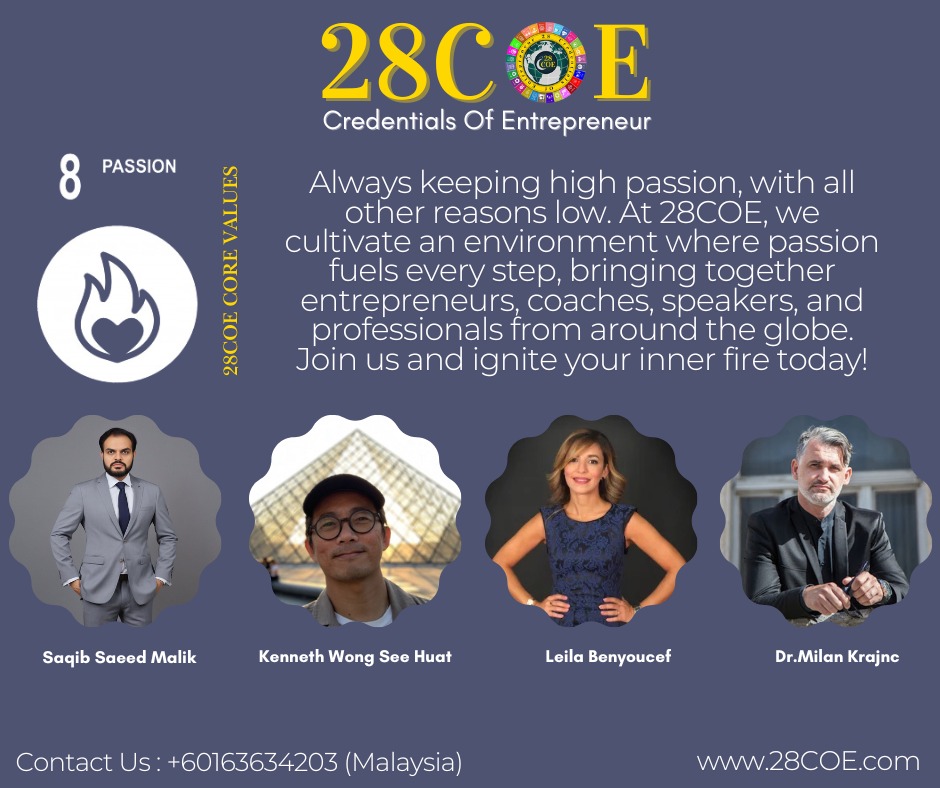
“Always keeping high passion, with all other reasons low.”

This mantra isn’t just personal—it resonates throughout his team, his products, and most notably, featured with 28COE – 28 Credentials of Entrepreneur.

The Global Stage for Entrepreneurs: 28COE

28COE isn’t just a platform—it’s a global phenomenon. Created to empower entrepreneurs from all walks of life, 28COE connects coaches, speakers, business owners, and aspiring changemakers across continents. Its goal?
To educate, empower, and elevate—by building a healthy start-up ecosystem, accelerating innovation, and strengthening economic growth worldwide.

With Mr. Saqib Saeed Malik being one of its proud voices, the synergy between NAZMED and 28COE speaks volumes about shared values—integrity, excellence, community, and purpose.

“At 28COE, we cultivate an environment where passion fuels every step.”

Together, Saqib and 28COE are setting a global example—not just in what entrepreneurs do, but in how they think and lead.

A Call to the World: Join the Movement

Whether you’re a budding entrepreneur, an established business leader, or someone with a dream and the fire to chase it—28COE is your platform. And with role models like Saqib Saeed Malik, the path has never been clearer.

🔗 Leverage. Network. Brand.
📢 Spread the word. Share the passion. Start your journey today.

The Future of Humanity: Embracing Technology with Ethics By Saqib Saeed Malik, CEO of Nazmed SMS Sdn Bhd

As we stand on the brink of a new era defined by rapid technological advancements, the future of humanity is filled with both unprecedented opportunities and significant challenges. From artificial intelligence to biotechnology, the innovations of today have the potential to reshape our world in ways we can hardly imagine. But with these advancements come important ethical questions that we must address if we are to ensure that technology serves the greater good.

One of the most pressing concerns is the impact of technology on our privacy and personal freedoms. As we become increasingly connected through the internet and digital devices, our personal data is being collected, stored, and analyzed on an unprecedented scale. This raises important questions about who controls this data, how it is used, and what rights we have to protect our privacy.

Another critical issue is the potential for technology to exacerbate existing inequalities. While technological advancements have the potential to improve lives and increase access to resources, they can also widen the gap between the haves and the have-nots. If we are not careful, the benefits of technology could be concentrated in the hands of a few, while leaving others behind.

To navigate these challenges, it is essential that we embrace technology with a strong ethical foundation. This means prioritizing the well-being of humanity over profit, ensuring that technological advancements are used to promote equality and justice, and protecting the rights and dignity of all individuals.

Ethics should not be an afterthought in the development and deployment of new technologies; it should be at the forefront of our decision-making processes. This requires collaboration between technologists, policymakers, ethicists, and the broader public to create a framework that guides the responsible use of technology.

Education also plays a crucial role in shaping the future of humanity. By teaching future generations about the ethical implications of technology, we can empower them to make informed decisions and to use technology in ways that benefit society as a whole.

As we look to the future, let us remember that technology is a tool, not an end in itself. It is up to us to decide how we use it—whether to create a world that is more just, equitable, and compassionate, or one that is driven by greed and exploitation. By embracing technology with ethics, we can ensure that it serves the greater good and enhances the well-being of all humanity.

The Role of Empathy in Healing a Divided World By Saqib Saeed Malik, Founder & CEO of Nazmed SMS Sdn Bhd

In a world that often feels divided—by politics, religion, race, and more—empathy stands out as a powerful tool for healing and reconciliation. Empathy is the ability to understand and share the feelings of others, to put ourselves in their shoes, and to see the world from their perspective. It is the bridge that connects us, transcending our differences and bringing us closer together.

The absence of empathy can lead to misunderstanding, conflict, and alienation. When we fail to recognize the humanity in others, we are more likely to view them as “other,” to dismiss their experiences, and to engage in behavior that harms rather than heals. This lack of empathy can manifest in many ways, from casual indifference to outright hostility, and it can tear apart the fabric of our communities and societies.

Empathy, on the other hand, has the power to unite us. It allows us to see the world through the eyes of others, to understand their struggles, and to respond with compassion and kindness. By practicing empathy, we can break down the walls that divide us and build bridges of understanding and cooperation.

One of the most important ways we can cultivate empathy is through active listening. This means truly paying attention to what others are saying, without judgment or interruption, and seeking to understand their perspective. It means being present in the moment and engaging with others in a way that shows we value their experiences and emotions.

Empathy also requires humility—the recognition that we don’t have all the answers and that our perspective is just one of many. By acknowledging our own limitations and being open to learning from others, we can foster a more inclusive and respectful dialogue, where diverse voices are heard and valued.

In a divided world, empathy is not just a nice-to-have quality; it’s a necessity. It’s the foundation of peaceful coexistence, allowing us to navigate our differences in a way that is constructive rather than destructive. It’s the key to healing the wounds of the past and building a more just and equitable future.

As we move forward, let us make empathy a priority in our lives. Let us strive to understand and connect with others, even when it’s difficult. By doing so, we can contribute to a world that is more compassionate, more united, and more human.

Building a Legacy: The Long-Term Impact of Entrepreneurial Ventures By Saqib Saeed Malik, Managing Director of Nazmed SMS Sdn Bhd

Entrepreneurship is not just about creating a successful business; it’s about building a legacy that can have a lasting impact on future generations. Successful entrepreneurs understand that their ventures are not merely profit-driven enterprises but are also vehicles for positive change in society.

One of the most significant ways in which entrepreneurs build a legacy is through the creation of sustainable businesses. These businesses not only generate profits but also contribute to the well-being of their communities and the environment. By adopting sustainable practices, entrepreneurs can ensure that their businesses have a positive impact on society for years to come.

Entrepreneurs also have the opportunity to leave a lasting legacy by mentoring and inspiring the next generation of business leaders. By sharing their knowledge, experiences, and insights, they can help shape the future of entrepreneurship and foster a culture of innovation and creativity. This mentorship can take many forms, from formal programs and workshops to informal advice and support.

Another critical aspect of building a legacy is giving back to the community. Many entrepreneurs use their success to support charitable causes, fund educational initiatives, and invest in social enterprises. This philanthropy not only benefits those in need but also strengthens the entrepreneur’s connection to their community and reinforces their legacy as a force for good.

Furthermore, entrepreneurs can leave a lasting impact by championing diversity and inclusion in the workplace. By creating businesses that value and promote diversity, they can help break down barriers and create opportunities for individuals from all backgrounds. This commitment to diversity can have a ripple effect, inspiring other businesses to follow suit and contributing to a more equitable and inclusive society.

In conclusion, entrepreneurship offers a unique opportunity to build a legacy that extends far beyond financial success. By focusing on sustainability, mentorship, philanthropy, and diversity, entrepreneurs can create a lasting impact that benefits society for generations to come.

Navigating the Health Maze: The Crucial Role of Networking in Healthcare

In today’s fast-paced world, where advancements in healthcare are happening at the speed of light, one thing remains constant: the importance of networking. As someone deeply immersed in the healthcare industry, I’ve come to realize that networking isn’t just about exchanging business cards or attending conferences; it’s the lifeblood that keeps our industry thriving and evolving.

Hi there, I’m Saqib Saeed Malik, and I’ve dedicated my career to pioneering excellence in health industry leadership as the Managing Director of NAZMED SMS SDN BHD. Through my journey, I’ve witnessed firsthand how networking has become indispensable in driving innovation, fostering collaboration, and ultimately, improving patient outcomes.

At its core, healthcare is a complex ecosystem where various stakeholders – from clinicians and researchers to policymakers and industry leaders – converge to address multifaceted challenges. In such a dynamic landscape, networking serves as the glue that connects disparate pieces, facilitating the flow of ideas, resources, and expertise.

One of the most significant benefits of networking in healthcare is the exchange of knowledge. In an era where medical breakthroughs occur with remarkable frequency, staying abreast of the latest developments is paramount. Through networking forums, such as conferences, symposiums, and online communities, healthcare professionals can share insights, best practices, and research findings, enriching their understanding and driving continuous improvement in patient care.

Moreover, networking fosters collaboration across disciplinary boundaries. Gone are the days when healthcare operated in silos; today, addressing complex health challenges requires a multidisciplinary approach. By forging connections with professionals from diverse backgrounds – be it medicine, technology, or public health – we can leverage collective expertise to tackle issues such as chronic diseases, infectious outbreaks, and healthcare disparities more effectively.

Networking also plays a pivotal role in career advancement and professional growth. Whether you’re a seasoned executive or a budding entrepreneur, building a robust network opens doors to new opportunities, mentorship, and strategic partnerships. Through meaningful interactions with industry peers, aspiring healthcare leaders can gain invaluable insights, hone their leadership skills, and even discover untapped potential within themselves.

However, perhaps the most profound impact of networking in the healthcare industry lies in its ability to drive innovation. From groundbreaking therapies to disruptive technologies, many of today’s transformative advancements are born out of collaborative endeavors fueled by networking. By fostering an environment where ideas can freely flow and serendipitous encounters can occur, networking catalyzes innovation, propelling the industry forward and improving health outcomes for millions worldwide.

In conclusion, networking isn’t just a buzzword; it’s a cornerstone of success in the healthcare industry. As we navigate the complexities of modern healthcare, let us recognize the immense value of building and nurturing meaningful connections. Whether it’s forging partnerships, sharing knowledge, or driving innovation, networking empowers us to create a healthier, more vibrant future for all.

So, let’s raise our glasses – not just in toast, but in celebration of the transformative power of networking in shaping the future of healthcare. Together, let’s continue to build bridges, break down barriers, and pave the way for a brighter, healthier tomorrow. Cheers to the journey ahead!

Navigating the Healthcare Maze: Building Bridges through Effective Networking

In the fast-paced world of healthcare, success isn’t just about expertise in your field; it’s also about who you know and how well you can leverage those connections. As someone deeply entrenched in the health industry, I’ve witnessed firsthand the transformative power of effective networking. Today, I’m excited to share some insights and strategies on how networking can be your secret weapon in achieving success in healthcare.

Meet Saqib Saeed Malik: An Emblem of Healthcare Leadership

Before we delve into the world of networking, let’s take a moment to introduce Saqib Saeed Malik, the dynamic Managing Director of Nazmed SMS Sdn Bhd. With a passion for innovation and a relentless drive for excellence, Saqib has carved a niche for himself as a leader in the health industry. His journey is not just about climbing the corporate ladder but also about fostering meaningful connections that have propelled his career forward.

The Power of Networking: Why It Matters

Networking isn’t just about exchanging business cards or LinkedIn connections; it’s about building genuine relationships based on trust, mutual respect, and shared goals. In the healthcare sector, where collaboration is key, networking can open doors to new opportunities, foster innovation, and drive positive change.

Here are some compelling reasons why networking is essential for success in healthcare:

  1. **Access to Resources**: Whether you’re seeking partnerships, funding, or expertise, having a strong network can provide access to valuable resources that can accelerate your projects and initiatives.
  2. **Professional Development**: Engaging with peers and industry leaders through networking events, conferences, and workshops can broaden your knowledge base, expose you to new ideas, and keep you updated on the latest trends and advancements in healthcare.
  3. **Opportunities for Collaboration**: Healthcare is a multidisciplinary field, and collaboration across specialties is crucial for delivering optimal patient care. Networking allows you to connect with professionals from diverse backgrounds and explore opportunities for collaboration that can lead to innovative solutions and improved outcomes.
  4. **Career Advancement**: Whether you’re looking for career advancement within your organization or exploring new opportunities elsewhere, networking can be a powerful tool for career growth. Building relationships with influential individuals in your industry can open doors to mentorship, job referrals, and leadership opportunities.

Effective Networking Strategies for Success

Now that we understand the importance of networking in healthcare let’s explore some effective strategies for building and nurturing professional connections:

  1. **Be Authentic**: Authenticity is the cornerstone of meaningful connections. Approach networking with a genuine desire to build relationships rather than just seeking personal gain. Be yourself, show interest in others, and let your passion for your work shine through.
  2. **Identify Your Goals**: Before diving into networking activities, take some time to clarify your goals. Whether you’re looking to expand your client base, explore career opportunities, or learn new skills, having clear objectives will guide your networking efforts and make them more effective.
  3. **Attend Industry Events**: Conferences, seminars, and networking events are excellent opportunities to meet like-minded professionals and expand your network. Be proactive in attending industry-specific events where you’re likely to meet individuals who share your interests and goals.
  4. **Utilize Online Platforms**: In today’s digital age, online networking platforms like LinkedIn offer a wealth of opportunities to connect with professionals in your industry. Keep your profile updated, join relevant groups and participate in discussions to increase your visibility and expand your network.
  5. **Follow Up**: Building a network is just the first step; maintaining and nurturing those connections is equally important. After meeting someone at an event or conference, be sure to follow up with a personalized message expressing your appreciation for the conversation and expressing your interest in staying in touch.
  6. **Give Back**: Networking is a two-way street. Look for ways to offer value to your connections, whether it’s sharing industry insights, making introductions, or offering assistance when needed. By giving back to your network, you’ll strengthen your relationships and build goodwill within your professional community.

In Conclusion

In the ever-evolving landscape of healthcare, effective networking can be a game-changer for professionals looking to achieve success and make a meaningful impact. By building genuine relationships, fostering collaboration, and staying engaged with your professional community, you’ll not only advance your career but also contribute to the collective growth and advancement of the healthcare industry.

So, let’s embrace the power of networking and work together to navigate the complexities of healthcare, build bridges across disciplines, and pave the way for a healthier future for all.

Embracing Quality Healthcare: A Cornerstone of Well-being

In the bustling landscape of modern life, where every day brings forth new challenges and triumphs, one aspect stands unwavering as the cornerstone of our collective well-being: quality healthcare. As we navigate the intricate web of existence, ensuring access to superior healthcare services emerges as not just a necessity but a fundamental right for all individuals.

Enter the realm of Saqib Saeed Malik, a luminary in the health industry whose journey embodies a steadfast commitment to excellence. With a career etched in the pursuit of elevating healthcare standards, Saqib stands as a beacon of inspiration, advocating for the pivotal role of quality healthcare in shaping a healthier, more prosperous society.

At the heart of the matter lies the undeniable truth that quality healthcare transcends mere medical treatment; it encompasses a holistic approach to nurturing and safeguarding human life. From preventive care and timely interventions to compassionate support during moments of vulnerability, the essence of quality healthcare resonates in every facet of our well-being.

Indeed, the importance of quality healthcare cannot be overstated. It serves as a catalyst for socio-economic development, empowering individuals to lead fulfilling lives unhindered by the burden of preventable illnesses. By fostering a culture of wellness and resilience, communities thrive, unlocking their full potential and contributing meaningfully to the fabric of society.

Moreover, quality healthcare is not a privilege reserved for a select few but a fundamental human right that must be accessible to all, irrespective of socio-economic status or geographic location. It is a testament to our collective humanity, reflecting our commitment to inclusivity and equity.

In the pursuit of excellence within the health industry, visionary leaders like Saqib Saeed Malik play a pivotal role in driving positive change. Through innovation, strategic partnerships, and a unwavering dedication to patient-centric care, they pave the way for a brighter, healthier future for generations to come.

As we navigate the complexities of a rapidly evolving world, let us not waver in our resolve to champion quality healthcare as a cornerstone of well-being. Together, we can build a future where every individual has the opportunity to thrive, supported by a robust healthcare system that embodies compassion, integrity, and excellence.