
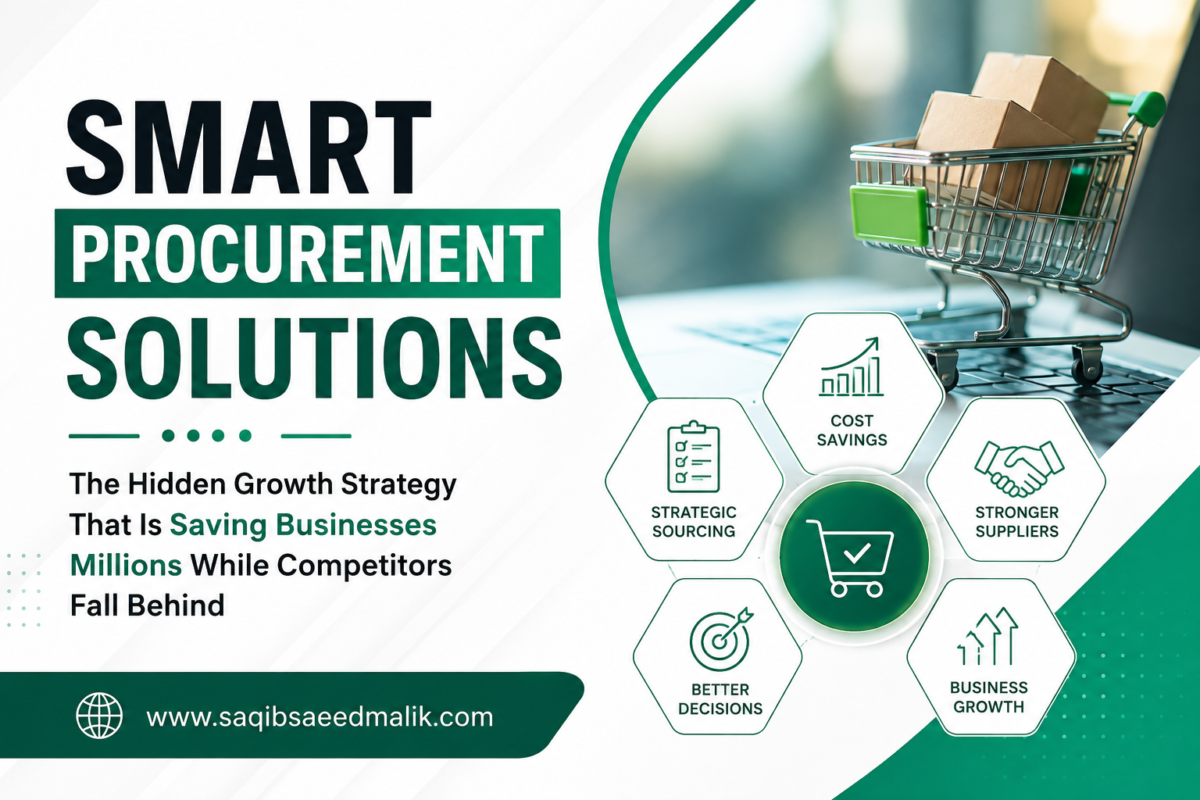
Smart Procurement Solutions: The Hidden Growth Strategy That Is Saving Businesses Millions While Competitors Fall Behind

Every successful business shares one common characteristic that often goes unnoticed. Behind every profitable project, every satisfied customer, and every growing company lies a procurement strategy that works with precision. While many organizations continue treating purchasing as a routine administrative function, industry leaders understand that procurement has evolved into one of the most powerful business growth engines. Smart procurement solutions are no longer reserved for multinational corporations.

They have become an essential requirement for businesses of every size that want to reduce operational costs, increase efficiency, eliminate unnecessary spending, and build a resilient supply chain capable of overcoming market uncertainties.  In an era where inflation, supply chain disruptions, fluctuating material costs, and changing customer expectations continue reshaping industries, organizations that fail to modernize procurement risk losing their competitive advantage. The companies that invest in intelligent procurement strategies today are positioning themselves for sustainable growth tomorrow.

What Are Smart Procurement Solutions?

Smart procurement solutions combine strategic planning, technology, supplier management, automation, data analytics, and informed decision-making to optimize every purchasing activity within an organization. Rather than simply buying products or services at the lowest possible price, smart procurement focuses on obtaining maximum long-term value by balancing cost, quality, supplier reliability, sustainability, risk management, and operational efficiency. Modern procurement is no longer about purchasing products. It is about purchasing business success.

Why Traditional Procurement Is No Longer Enough

Many businesses still rely on outdated procurement practices that create hidden financial losses every single day. Common procurement challenges include delayed approvals, manual paperwork, inconsistent supplier evaluation, duplicate purchasing, poor inventory planning, unexpected price increases, lack of spending visibility, communication gaps between departments, compliance issues, and limited market intelligence. These inefficiencies may appear small individually, but together they quietly drain profitability, reduce productivity, and create unnecessary operational risks. Businesses that ignore these warning signs often struggle to remain competitive as markets continue evolving.

The Real Business Value of Smart Procurement Solutions

Organizations implementing intelligent procurement systems experience improvements that extend far beyond purchasing departments. Cost optimization becomes more consistent because purchasing decisions are based on market intelligence rather than assumptions. Supplier relationships improve through transparent communication, long-term collaboration, and performance measurement. Inventory management becomes more accurate, reducing both shortages and excessive stock. Approval workflows become faster, allowing businesses to respond quickly to customer demands. Financial forecasting becomes more reliable because procurement spending becomes measurable and predictable. Business leaders gain complete visibility into organizational spending, allowing better budgeting and strategic planning. Every procurement decision begins contributing directly to business growth instead of merely supporting daily operations.

How Procurement Technology Is Revolutionizing Business Operations

Technology has transformed procurement into a highly intelligent business function. Artificial intelligence helps predict purchasing trends before shortages occur. Automation eliminates repetitive manual tasks while reducing human errors. Cloud-based procurement systems enable teams to collaborate from anywhere in the world. Real-time analytics provide immediate insights into supplier performance, spending patterns, procurement risks, and cost-saving opportunities. Digital procurement platforms improve transparency, strengthen compliance, simplify approvals, and accelerate purchasing cycles. Organizations embracing procurement technology gain significant operational advantages that traditional purchasing methods simply cannot match.

Strategic Supplier Management Creates Long-Term Success

Suppliers should never be viewed as simple vendors. The strongest businesses treat suppliers as strategic partners. Smart procurement solutions emphasize supplier evaluation, continuous performance monitoring, quality assurance, delivery consistency, ethical sourcing, financial stability, and collaborative innovation. Strong supplier relationships create more reliable deliveries, better pricing opportunities, improved product quality, faster problem resolution, and increased resilience during market disruptions. When businesses invest in supplier partnerships instead of transactional purchasing, everyone benefits.

Reducing Procurement Risks Before They Become Business Problems

Every procurement decision carries potential risks. Supplier bankruptcy, transportation delays, geopolitical conflicts, regulatory changes, cyber threats, natural disasters, price volatility, and contract disputes can significantly disrupt operations. Smart procurement solutions help organizations identify these risks before they become expensive emergencies. Risk assessments, diversified supplier networks, contract management systems, performance monitoring, compliance tracking, and predictive analytics all contribute to stronger procurement resilience. Prepared organizations recover faster because they anticipate challenges instead of reacting after damage occurs.

Data-Driven Procurement Leads to Smarter Decisions

Business decisions should never rely solely on assumptions. Modern procurement uses data to guide every purchasing decision. Analytics reveal supplier performance trends, purchasing patterns, seasonal demand changes, inventory requirements, pricing opportunities, and operational inefficiencies. Business leaders gain actionable insights that improve negotiations, optimize budgets, strengthen forecasting, and maximize return on investment. Data transforms procurement from guesswork into strategic intelligence.

Sustainability Has Become a Procurement Priority

Customers, investors, and governments increasingly expect businesses to operate responsibly. Smart procurement includes environmental responsibility, ethical sourcing, supplier transparency, waste reduction, and sustainable purchasing practices. Organizations prioritizing responsible procurement strengthen brand reputation, reduce regulatory risks, attract environmentally conscious customers, and create long-term business value. Sustainability is no longer optional. It has become a competitive advantage.

Industries Benefiting from Smart Procurement Solutions

Smart procurement solutions deliver measurable value across nearly every industry. Manufacturing companies improve production planning while reducing raw material costs. Healthcare organizations ensure uninterrupted access to essential medical supplies. Construction firms manage complex supplier networks more efficiently. Hospitality businesses improve inventory control while maintaining service quality. Retail companies optimize stock levels and respond faster to changing consumer demand. Educational institutions simplify purchasing while maintaining compliance. Government organizations improve transparency and accountability. Technology companies accelerate innovation through strategic supplier collaboration. Regardless of industry, procurement excellence directly influences operational performance.

Essential Features of Modern Smart Procurement Solutions

Businesses seeking procurement transformation should prioritize centralized purchasing platforms, automated approval workflows, supplier relationship management, contract lifecycle management, spend analytics, inventory integration, demand forecasting, compliance monitoring, mobile accessibility, cloud deployment, cybersecurity protection, real-time dashboards, artificial intelligence capabilities, and customizable reporting.  These capabilities provide organizations with greater control, efficiency, visibility, and long-term scalability.

How Small Businesses Can Compete with Large Enterprises

Smart procurement is no longer exclusive to global corporations. Affordable digital procurement platforms now allow small and medium-sized businesses to negotiate better supplier contracts, automate purchasing workflows, monitor expenses, improve supplier relationships, and gain valuable spending insights. Technology has leveled the playing field. Businesses that embrace procurement innovation can compete with organizations many times their size.

The Future of Procurement Is Already Here

The future belongs to businesses that make faster, smarter, and more informed purchasing decisions. Artificial intelligence, machine learning, blockchain, predictive analytics, robotic process automation, digital supplier ecosystems, and intelligent contract management will continue reshaping procurement over the coming years. Organizations delaying procurement modernization may find themselves struggling to catch up as competitors increase efficiency, reduce costs, and strengthen supply chain resilience. The question is no longer whether businesses should modernize procurement. The real question is whether they can afford not to.

Take Action Before Procurement Becomes Your Biggest Weakness

Every unnecessary purchase, delayed approval, unreliable supplier, and missed cost-saving opportunity reduces your organization’s potential. Smart procurement solutions empower businesses to transform purchasing into a strategic competitive advantage that improves profitability, strengthens supplier partnerships, minimizes operational risks, and accelerates long-term growth. The organizations leading tomorrow’s markets are making smarter procurement decisions today. Now is the time to evaluate your procurement strategy, embrace intelligent technologies, build stronger supplier relationships, and create a purchasing system that supports sustainable business success. The businesses that invest in procurement excellence today will become the market leaders everyone else tries to follow tomorrow.
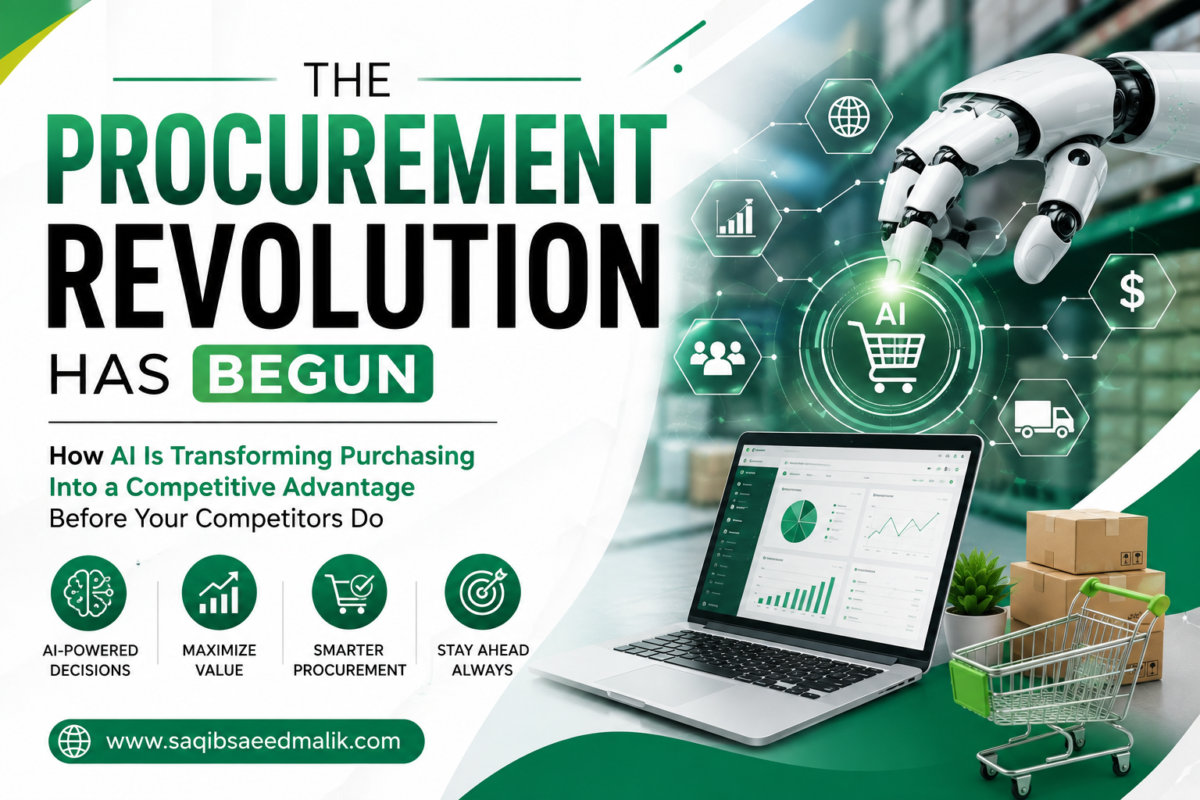
The Procurement Revolution Has Begun: How AI Is Transforming Purchasing Into a Competitive Advantage Before Your Competitors Do

For decades, procurement was viewed as a back-office function responsible for sourcing products, negotiating with suppliers, and ensuring materials arrived on time. Today, that perception is rapidly changing. Artificial Intelligence is transforming procurement into one of the most strategic business functions capable of driving profitability, improving operational efficiency, reducing risks, and creating a significant competitive advantage. Organizations that continue relying solely on manual procurement processes are already falling behind. Every delayed purchase, every supplier mistake, every pricing inconsistency, and every missed opportunity represents money leaving the business. Meanwhile, companies embracing AI-powered procurement are making faster decisions, negotiating smarter contracts, forecasting demand more accurately, and building stronger supplier relationships than ever before. The future of procurement has arrived, and businesses that fail to embrace it may struggle to compete in an increasingly data-driven marketplace.

What Is AI in Procurement?

Artificial Intelligence in procurement refers to the use of intelligent technologies such as machine learning, predictive analytics, natural language processing, robotic process automation, and advanced data analytics to automate and improve procurement activities. Rather than simply replacing repetitive tasks, AI enhances human decision-making by analyzing massive volumes of procurement data in seconds. It identifies spending patterns, predicts supplier risks, recommends purchasing decisions, detects fraud, forecasts demand, and continuously learns from historical purchasing behavior. The result is faster procurement, better purchasing decisions, and stronger financial performance.

Why Procurement Is Becoming More Important Than Ever

Global supply chains have become increasingly complex. Economic uncertainty, inflation, geopolitical tensions, transportation disruptions, changing customer expectations, and rising supplier costs have made procurement one of the most critical functions in any organization. Traditional procurement methods often rely on spreadsheets, manual approvals, lengthy negotiations, and fragmented supplier information. These outdated systems create unnecessary delays, higher operational costs, increased risks, and poor visibility across the purchasing process. Artificial Intelligence addresses these challenges by providing real-time intelligence that enables procurement teams to act quickly, accurately, and confidently.

How AI Is Changing Procurement Forever

Artificial Intelligence introduces speed, accuracy, and intelligence into every stage of procurement. Instead of manually reviewing thousands of supplier quotations, AI compares prices instantly and identifies the best value based on quality, delivery performance, supplier history, and contract terms. Rather than waiting for inventory shortages, AI predicts future demand and recommends optimal purchasing schedules. Instead of reacting to supplier disruptions after they happen, AI continuously monitors supplier performance and identifies risks before they impact operations. Instead of spending hours processing invoices, AI automates invoice matching, approval workflows, and payment verification with exceptional accuracy. These improvements free procurement professionals to focus on strategy, innovation, supplier collaboration, and business growth.

Key Benefits of AI in Procurement

Smarter Purchasing Decisions

AI analyzes historical purchasing data alongside current market conditions to recommend the most cost-effective purchasing strategy. Decision-makers gain access to accurate insights rather than relying on assumptions or outdated reports.

Lower Procurement Costs

AI identifies duplicate purchases, unnecessary spending, pricing inconsistencies, and supplier inefficiencies that often remain hidden within large procurement datasets. Even small improvements in purchasing efficiency can generate substantial annual savings.

Improved Supplier Selection

Choosing suppliers based solely on price can create long-term problems. AI evaluates suppliers using multiple performance indicators including delivery reliability, quality history, financial stability, compliance records, sustainability practices, and customer satisfaction. This leads to stronger supplier partnerships and fewer operational disruptions.

Faster Procurement Processes

Manual procurement workflows consume valuable time. AI automates repetitive administrative tasks including purchase requisitions, purchase order generation, contract analysis, invoice processing, and approval routing. Procurement teams complete more work with fewer resources while maintaining higher accuracy.

Risk Management

Supply chain disruptions have become increasingly common. Artificial Intelligence continuously monitors supplier performance, financial news, geopolitical developments, natural disasters, and market changes that may affect procurement operations. Early warnings allow businesses to prepare before disruptions occur.

Fraud Detection

AI recognizes unusual purchasing behaviors, duplicate invoices, suspicious transactions, unauthorized spending, and vendor anomalies that human reviewers may overlook. This strengthens procurement governance and protects company finances.

Demand Forecasting

AI accurately predicts future purchasing needs using historical demand, seasonal trends, production schedules, customer behavior, and external market conditions. Better forecasting reduces excess inventory while preventing costly stock shortages.

Artificial Intelligence Is Making Procurement More Human

Many professionals worry that AI will replace procurement jobs. The reality is quite different. Artificial Intelligence removes repetitive administrative work while allowing procurement professionals to concentrate on negotiation, relationship building, supplier development, sustainability initiatives, innovation, and strategic planning. Rather than replacing people, AI empowers procurement experts with better information and greater productivity. Human expertise combined with AI intelligence produces significantly better business outcomes.

Industries Already Benefiting From AI Procurement

Artificial Intelligence is creating measurable improvements across nearly every industry. Manufacturing companies optimize raw material purchasing while reducing production delays. Healthcare organizations improve medical supply availability while lowering procurement costs. Retail businesses forecast customer demand more accurately and prevent inventory shortages. Construction companies monitor supplier performance across multiple projects simultaneously. Hospitality businesses streamline purchasing for hotels, restaurants, and event operations. Government agencies improve procurement transparency and regulatory compliance. Technology companies automate vendor management while accelerating purchasing cycles. Regardless of industry, AI creates faster, smarter, and more resilient procurement operations.

Common Challenges Businesses Face Without AI

Organizations that continue relying on traditional procurement methods frequently encounter recurring problems. Manual data entry increases errors. Slow approval processes delay production. Limited supplier visibility creates purchasing risks. Poor demand forecasting causes overstocking or stock shortages. Inefficient contract management leads to missed savings opportunities. Lack of spending transparency reduces profitability. Fraud remains difficult to detect. Supplier performance becomes inconsistent. As markets become more competitive, these challenges become increasingly expensive.

How Businesses Can Successfully Implement AI in Procurement

Successful AI adoption begins with understanding existing procurement processes. Organizations should first identify repetitive manual tasks, data bottlenecks, supplier management challenges, and spending inefficiencies. Clean procurement data is essential because AI performs best when trained using accurate historical information. Businesses should begin with high-impact applications such as spend analytics, supplier evaluation, invoice automation, or demand forecasting before expanding AI across the entire procurement function. Employee training is equally important. Procurement professionals should understand how AI supports decision-making rather than viewing it as a replacement for their expertise. Organizations that combine technology, process improvement, and skilled procurement professionals achieve the strongest long-term results.

The Future of Procurement Belongs to Intelligent Businesses

Artificial Intelligence will continue reshaping procurement over the coming years. Future procurement systems will negotiate routine purchases automatically, monitor global supplier risks continuously, predict market price fluctuations, recommend sustainability-focused suppliers, optimize inventory levels in real time, and provide executives with instant procurement intelligence. Companies adopting AI today will gain valuable experience while competitors struggle to modernize outdated procurement processes. The gap between AI-powered procurement organizations and traditional procurement teams will continue growing. Waiting for competitors to move first is no longer a safe strategy.

Why Every Business Leader Should Act Now

Every procurement decision affects profitability, customer satisfaction, operational continuity, and long-term business growth. Artificial Intelligence gives organizations the ability to purchase smarter, negotiate better, forecast accurately, reduce operational risks, and create stronger supplier relationships. Businesses that embrace AI today are building procurement systems prepared for tomorrow’s challenges. Those delaying adoption may find themselves paying higher costs, reacting more slowly to market changes, and losing competitive advantage to organizations making faster, data-driven decisions. The procurement revolution is already underway. The only remaining question is whether your organization will lead it or struggle to catch up. Businesses that invest in intelligent procurement today will become the market leaders of tomorrow.