
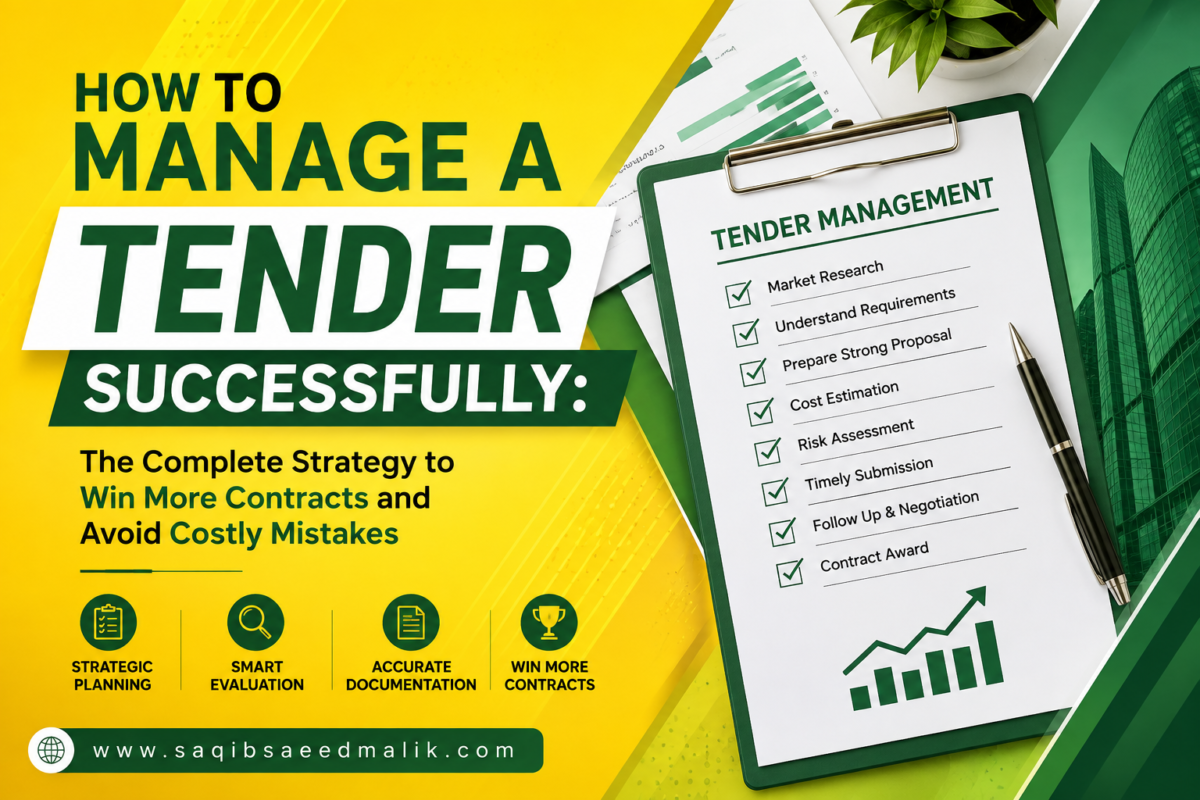
Winning a tender is not simply about submitting the lowest price. It is about proving that your company understands the requirement, can deliver what is promised, manages risk professionally, and deserves the buyer’s confidence. Whether you are responding to a government tender, corporate procurement opportunity, construction contract, supply agreement, or service tender, every decision matters. A single missed requirement, unclear proposal, unrealistic price, or late submission can eliminate an otherwise capable business. This is why learning how to manage a tender properly is not an administrative task; it is a business growth skill.
1. Understand the tender before you decide to bid
The first mistake many businesses make is rushing to prepare a proposal before understanding the tender completely. Before committing resources, carefully study the tender notice, scope of work, specifications, eligibility requirements, submission instructions, evaluation criteria, deadlines, contractual conditions, and required documents. Ask yourself whether your company genuinely has the experience, financial capacity, manpower, technology, certifications, and resources required. A professional tender manager does not chase every opportunity. They identify the tenders where the business has a realistic chance of delivering successfully and winning competitively.
2. Build a powerful tender management team
A successful tender rarely comes from one person working alone. Depending on the size of the opportunity, your team may need sales, finance, operations, technical specialists, legal advisers, procurement professionals, project managers, and senior management. Assign clear responsibilities from the beginning. One person should own the tender timeline and ensure every department delivers its information on time. When responsibility is unclear, important documents can be forgotten, pricing can become inconsistent, and last-minute pressure can damage the quality of the final submission.
3. Create a tender compliance matrix
One of the most powerful tools in tender management is a compliance matrix. Take every requirement in the tender document and convert it into a clear internal requirement. Record what needs to be submitted, who is responsible, what evidence is required, and whether the requirement has been completed. This helps your team distinguish between mandatory requirements and areas where you can demonstrate additional value. Many businesses lose tenders not because they lack capability, but because they fail to demonstrate compliance correctly. Your proposal must make it easy for evaluators to see that you have answered what they asked.
4. Develop a winning tender strategy
Once the requirements are understood, determine how your company will compete. Your strategy should go beyond price. Identify the buyer’s priorities and determine what makes your business different. Is your strength faster delivery, better quality, specialist expertise, stronger customer service, technology, sustainability, local capability, proven experience, or lower operational risk? Your tender should communicate a clear reason for choosing your company. A proposal that simply repeats the tender document may demonstrate compliance, but a strategically written proposal demonstrates understanding, capability, and value.
5. Get your pricing right
Pricing can make or break a tender. If you price too high, you may become uncompetitive. If you price too low, you may win work that becomes financially damaging to deliver. Your pricing should consider materials, labour, logistics, overheads, taxes, subcontractors, equipment, insurance, financing costs, project risks, and appropriate profit margins. Never reduce your price simply because you believe the buyer wants the cheapest supplier. Understand the commercial environment first. A sustainable contract is more valuable than a contract that creates revenue but destroys your margin.
6. Write a proposal that speaks to the evaluator
A professional tender response should be clear, structured, evidence-based, and easy to evaluate. Avoid filling pages with generic corporate language. Instead, connect your capabilities directly to the buyer’s requirements. Explain how you will deliver the work, who will deliver it, what systems you will use, how quality will be controlled, how risks will be managed, and how performance will be measured. Use relevant case studies, qualifications, certifications, testimonials, project experience, and measurable results where appropriate. Your goal is not simply to tell the evaluator that your company is excellent. Your goal is to prove it.
7. Manage deadlines like a critical business operation
Tender deadlines should never be treated as ordinary administrative deadlines. Create an internal deadline that is earlier than the official submission deadline. This gives your team time to review documents, correct errors, obtain signatures, verify pricing, check file formats, and resolve technical problems. Build a tender calendar showing every milestone from initial review to final submission. If a clarification period is available, submit important questions early rather than waiting until the last moment. Strong tender management creates time for thinking; weak tender management creates panic.
8. Control documents, evidence, and approvals
Tender submissions often require company profiles, financial information, registrations, certifications, references, technical documents, declarations, policies, insurance documents, staff qualifications, project histories, and other supporting evidence. Maintain an organised document library so your team can access current versions quickly. Pay attention to expiry dates and ensure that documents submitted are valid and consistent. Before submission, conduct a formal review of every attachment and declaration. One outdated certificate or incorrect company detail can undermine confidence in an otherwise strong proposal.
9. Identify risks before the contract begins
Tender management should not stop at winning. Before submitting, examine the potential risks associated with the contract. Consider payment terms, delivery obligations, performance guarantees, penalties, warranty requirements, resource availability, supply chain uncertainty, contractual liabilities, changing specifications, and unexpected costs. If the tender includes contractual conditions that create significant exposure, involve the appropriate commercial or legal professionals before committing. Winning a tender is only a victory if your company can deliver the contract profitably, professionally, and without exposing itself to unnecessary risk.
10. Conduct a final bid review before submission
Never submit a major tender without an independent final review. Ideally, someone who was not involved in writing every section should examine the proposal with fresh eyes. Check compliance, pricing, calculations, signatures, attachments, formatting, page limits, file names, submission instructions, mandatory forms, and evaluation criteria. Then ask the most important question: if you were the buyer, would this proposal give you a compelling reason to select this company? A final review can uncover weaknesses that the original writers have become too familiar with to notice.
11. Turn every tender into a long-term business advantage
Whether you win or lose, every tender should teach your organisation something. After the outcome, review what worked, what failed, where competitors may have been stronger, whether the pricing was appropriate, and whether your proposal clearly communicated your value. Keep a record of successful strategies and recurring weaknesses. Over time, your organisation can build a powerful tender knowledge base that makes future submissions faster, stronger, and more competitive. The businesses that consistently win tenders are rarely relying on luck. They build systems, learn from every opportunity, protect their margins, understand their buyers, and continuously improve.
Final thoughts
Tender management is where preparation meets opportunity. A tender is more than a document sent to a buyer; it is a commercial argument for why your company should be trusted with valuable work. The organisations that take tender management seriously understand that every requirement matters, every number has consequences, every claim needs evidence, and every deadline carries weight. If your business wants to win more contracts, do not simply submit more tenders. Build a better tender management process. Start before the opportunity arrives, prepare your documents in advance, understand your ideal contracts, strengthen your evidence, train your team, and create a repeatable system. The next tender you win could begin with the process you improve today.