
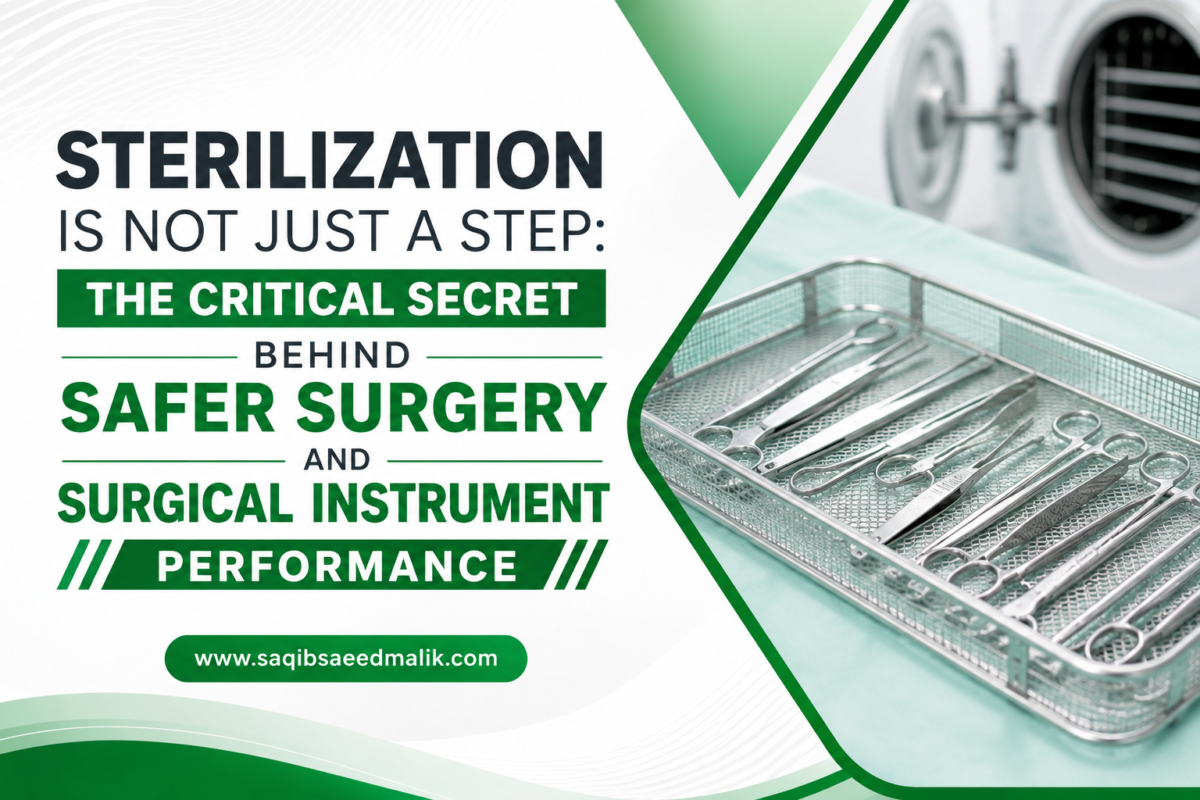
In surgery, precision is everything. A surgeon may have exceptional skill, a modern operating room may have advanced technology, and a hospital may follow strict clinical protocols, but one neglected area can compromise the entire procedure: the sterilization of surgical instruments. Surgical instruments come into direct or indirect contact with patients, tissue, blood, and bodily fluids, making effective sterilization an essential part of infection prevention. Proper sterilization is not simply a routine cleaning task; it is a critical safety process designed to eliminate microorganisms and reduce the risk of healthcare-associated infections. When the stakes involve human lives, there is no room for shortcuts.
What Is Surgical Instrument Sterilization?
Surgical instrument sterilization is the controlled process of eliminating all forms of viable microorganisms from reusable medical instruments. Depending on the instrument, material, design, and manufacturer’s instructions, sterilization may involve methods such as steam sterilization, low-temperature sterilization, or other validated technologies. Before sterilization, instruments must generally undergo appropriate cleaning and preparation because blood, tissue, and other organic material can interfere with the effectiveness of the sterilization process. This is why sterilization should be viewed as part of a complete reprocessing workflow rather than an isolated procedure.
The Real Danger of Poorly Sterilized Instruments
A surgical instrument may appear perfectly clean to the naked eye and still present a microbiological risk. Microscopic contamination can remain inside joints, serrations, hinges, box locks, lumens, or other difficult-to-clean areas. If an instrument is inadequately cleaned, improperly packaged, incorrectly sterilized, or poorly stored afterward, microorganisms may survive or contamination may be reintroduced. The consequences can extend far beyond one instrument or one procedure. A failure in reprocessing can potentially contribute to surgical site infections, patient complications, increased healthcare costs, longer hospital stays, and damage to institutional trust.
Cleaning Comes Before Sterilization
One of the most important principles of instrument reprocessing is simple: sterilization cannot compensate for inadequate cleaning. Surgical instruments should first be appropriately cleaned according to established procedures and the instrument manufacturer’s instructions. Visible soil and organic material must be removed before the sterilization stage. Particular attention is required for instruments with complex structures, such as hinged forceps, needle holders, clamps, retractors, and instruments with narrow or difficult-to-access areas. A strong sterilization program therefore begins long before instruments enter the sterilizer.
Choosing the Correct Sterilization Method
Not every surgical instrument should automatically be processed using the same sterilization method. Instrument construction, materials, thermal tolerance, design, and manufacturer recommendations all matter. Steam sterilization is widely used for heat- and moisture-tolerant surgical instruments because it can provide reliable sterilization when the correct parameters are achieved. Certain heat-sensitive devices may require alternative validated methods. The goal is not simply to select the most powerful method; it is to use an appropriate, validated process that is compatible with the instrument and effective against microorganisms.
Temperature, Time, Pressure, and Process Control Matter
Effective sterilization depends on achieving the parameters required by the specific sterilization process. For steam sterilization, factors such as temperature, exposure time, steam quality, and pressure are important. Simply placing instruments inside a sterilizer and starting a cycle does not guarantee successful sterilization. Healthcare facilities need validated processes, appropriate monitoring, routine equipment maintenance, and documented quality-control procedures. Every stage matters because sterilization is a controlled scientific process, not a visual judgment. The instrument may look clean, but safety depends on whether the validated process has actually been achieved.
Packaging and Storage Are Part of Patient Safety
Sterilization does not end when the sterilizer cycle finishes. Proper packaging, handling, storage, and transportation are essential for maintaining sterility until instruments are required for use. Sterile packs should be protected from damage, moisture, dust, and unnecessary handling. If packaging becomes compromised, the sterility of its contents may no longer be assured. This is why sterile storage areas require appropriate environmental controls and careful inventory practices. A perfectly sterilized instrument can still become contaminated if it is poorly handled afterward.
Instrument Design and Quality Influence Reprocessing
The quality and design of surgical instruments also play an important role in effective reprocessing. Precision-manufactured instruments with properly finished surfaces, functional joints, and suitable materials can support consistent cleaning, maintenance, and sterilization when processed according to instructions. Damaged, corroded, cracked, or malfunctioning instruments should be identified and removed from service when they cannot be safely reprocessed or maintained. Choosing reliable surgical instruments is therefore not only about surgical performance; it is also about supporting a dependable instrument lifecycle from purchase and use through cleaning, sterilization, maintenance, and storage.
Why Hospitals Need Strong Sterilization Protocols
A successful sterilization program depends on people, equipment, procedures, documentation, and continuous monitoring working together. Staff involved in instrument reprocessing need appropriate training and must understand the risks associated with every stage of the workflow. Written procedures should define cleaning, inspection, packaging, sterilization, monitoring, storage, and handling requirements. Facilities should also follow applicable national regulations, recognized infection-prevention guidance, and manufacturer instructions. Strong protocols create consistency, while regular monitoring helps identify problems before they become patient-safety incidents.
The Cost of Cutting Corners Can Be Far Greater Than the Cost of Prevention
Healthcare organizations often focus heavily on purchasing surgical instruments, operating-room technology, and other equipment, but the long-term value of those investments depends partly on how well they are maintained and reprocessed. Cutting corners in sterilization may appear to save time or resources, but the potential consequences can be substantially more serious. Patient safety, hospital reputation, staff confidence, regulatory compliance, and operational efficiency are all connected to reliable infection-prevention practices. Sterilization should never be treated as an expense to minimize; it should be treated as an essential investment in safe healthcare.
A Safer Surgical Future Starts With Taking Sterilization Seriously
Every surgical instrument has a purpose, but every sterilization process has a responsibility behind it: protecting the next patient. From the first cleaning step to final sterile storage, each stage contributes to the safety of surgical care. Hospitals, clinics, medical professionals, and surgical instrument suppliers should recognize that instrument quality and proper reprocessing belong to the same conversation. The message is simple but powerful: clean-looking is not the same as sterile, and routine is not the same as safe. When healthcare organizations make validated sterilization, staff training, quality instruments, monitoring, and proper handling a priority, they strengthen the foundation of safer surgery and better patient care.
Final Thought
Surgical instrument sterilization is not merely a technical requirement hidden behind the operating room. It is one of the quiet safeguards standing between a successful procedure and preventable infection risk. The best surgical environment is not defined only by advanced technology or skilled professionals; it is also defined by the discipline to get the fundamentals right every time. When patient safety is the priority, sterilization cannot be an afterthought. It must be a standard.